
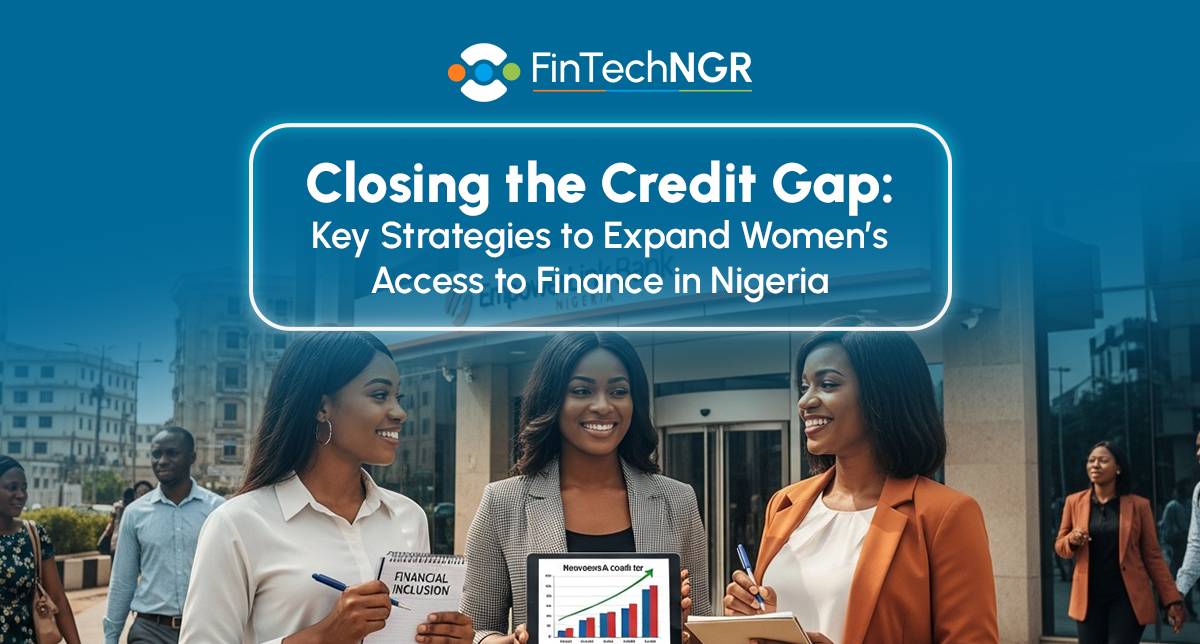

Despite owning 41% of micro-businesses and playing a vital role in household and community resilience, Nigerian women continue to face significant challenges in accessing credit. In July 2025, The Economic Inclusion CoP of FintechNGR hosted a powerful and data-driven webinar to tackle this issue. The session brought together policymakers, gender advocates, fintech leaders, and development professionals to explore practical and scalable ways to close the persistent gender credit gap.
The conversation shed light on the systemic, cultural, and operational barriers that prevent women-led MSMEs from fully participating in Nigeria’s formal financial ecosystem. More importantly, the session offered actionable strategies to unlock access, ensure sustainability, and drive inclusive growth.
Why This Matters
- Women are underrepresented in formal lending despite their critical contribution to Nigeria’s economy.
- Only 16% of Nigerian women accessed credit in 2023 versus 23% of men.
- Informal sector dynamics, lack of documentation, and socio-cultural norms are key constraints.
Key Insights & Strategies for Change
Break Cultural and Legal Barriers
- Engage traditional leaders and male allies to challenge gender norms.
- Partner with ministries and legal institutions to reform laws preventing women from owning collateral assets.
Fix the Documentation and ID Gap
- Many women lack CAC registration, NIN, or financial records.
- Introduce mobile-based ID and registration drives tailored for rural areas.
- Collaborate with NIMC, telcos, and financial service providers to onboard more women through assisted tech.
Design with Data, Not Assumptions
- Move away from “one-size-fits-all” products.
- Collect gender-disaggregated data at national and sub-national levels to inform policy and product design.
- Include women in product teams to remove unconscious design bias.
Empower Frontline Women-Led MSMEs
- Provide training in digital literacy, bookkeeping, and financial management.
- Build trust and confidence through relatable outreach and human-centered onboarding.
- Invest in community-based financial education campaigns using women leaders and associations.
Rethink Risk Assessment
- Use POS history, sales trends, and inventory movement as alternative credit scoring tools.
- Leverage behavioral and transaction data over traditional collateral.
- Explore partnerships with informal cooperatives and market groups to vet creditworthiness.
Make Lending More Inclusive by Default
- Simplify processes and reduce the cost of borrowing for women.
- Embed gender inclusivity into fintech and banking onboarding journeys.
- Prioritize digital lending models that reduce bias and promote access.
A Call to Action
The webinar made it clear: access to credit is more than a financial issue, it’s a social justice issue, a productivity issue, and a national growth issue. With a potential $300 billion GDP gain across Sub-Saharan Africa, closing the credit gap is not only the right thing to do but the smart thing.
To make change stick, collaboration is key. From regulators to grassroots leaders, fintechs to telcos, DFIs to donor agencies, each stakeholder has a role to play.
FintechNGR remain committed to fostering policy innovation, scalable partnerships, and bold conversations that drive inclusion, equity, and economic transformation for Nigerian women.
To become a member of FintechNGR, kindly register here: https://fintechng.org/